

The best place to store cash
Are you wondering: “What is a better alternative to cash?
Are you tired of earning meager interest on your savings?
Finally, interest rates are rising. You can get a great return on your cash today and be prepared to pay higher interest later. As interest rates rise, there are several places to park your cash and automatically receive higher interest, such as money market mutual funds and robo-advisors’ high-yield cash accounts.
If you’re looking for cash alternatives and are willing to tie up your funds for 3, 6, 9 months, or a year, you can get higher returns from Treasury bills and certificates of deposit (CDs).
This article may contain affiliate links method – ZERO COST TO YOU – I may earn a commission if you sign up or purchase through an affiliate link.
Why you need cash
To achieve your short- and medium-term goals, you need to keep a portion of your funds in liquid, cash-type accounts. If you plan to buy a house or car within a year or so, don’t put your down payment in the stock market. You also need to be prepared for those pesky emergencies; a leaky roof, a broken gasket, or unexpected medical bills. Additionally, during a downturn in the investing market, it’s good to know that you don’t need to sell stocks at a loss to meet immediate financial needs.
Here are some strategies for earning great cash returns.
7 alternatives to cash
1. High Yield Cash Account
Automated investment advisors or robo-advisors aren’t just for investment management, many offer high cash returns with no fees or lock-in periods. In fact, many robo-advisors pay higher yields than money market mutual funds. It’s easy to open a high-yield cash account with a robo-advisor like Wealthfront, Betterment, or M1 Finance. After providing basic personally identifiable information, simply link your bank account and transfer cash. Robo-advisor cash accounts can offer high interest rates because they partner with multiple banks to provide the highest yield or return on cash available. These financial companies also offer bank-level security.
2. Money Market Mutual Funds
These financial instruments have a stable dollar value and pay a higher yield than most savings accounts. They typically own short-term debt issued by companies and governments. These are different from “money market accounts” that banks may offer. You’ll need to purchase these cash alternative mutual funds within a major investment brokerage account such as Fidelity, Vanguard, Goldman Sachs, and others. If you have a cash balance in your investment brokerage account, be sure to move it to higher-yielding cash alternative money market mutual funds. Easy access to cash when investment is needed in the future.
Cash swing accounts at most financial brokerage firms pay a lower interest rate on cash than money market mutual funds. Remember to transfer cash out of the fund if needed for future investment transactions.
A money market fund is a mutual fund that invests in highly liquid, short-term instruments. These instruments include cash, cash equivalent securities, and highly credit-rated debt securities with short maturities (such as U.S. Treasury securities). Money market funds are designed to provide investors with high liquidity and very low risk. Money market funds are also known as money market mutual funds.
3. TIPS-Treasury Inflation-Protected Securities
Treasury Inflation-Protected Securities (TIPS) won’t make you rich, but when inflation rises, so will the interest rate you pay on your TIPS bonds.
How does TIPS investing work?
- For TIPS, the interest rate is set on the date of purchase. It always remains the same.
- The principal value of an investment fluctuates up and down with the rate of inflation.
- When the principal increases (decreases), you will earn a larger (smaller) amount of interest on the new principal amount.
- When a TIPS security matures, you receive the higher, or original, principal amount; you never receive the smaller principal amount at maturity.
You can purchase TIP at TreasuryDirect.gov or through your investment brokerage account.
If you prefer to buy a TIP fund like VTIP, you can do so through any investment brokerage firm that sells ETFs. SoFi Invest and M1 Finance both offer ETF investing and free investment management. SoFi also offers the services of a free financial advisor.
4. First round of government bonds
Series I (targeted for inflation) government bonds are similar to TIPS. With an I Bond, you not only get a fixed interest rate, but also bonuses; an adjustable interest rate that changes every six months, as well as the rate of inflation. Therefore, the combined rate consists of a fixed rate plus an inflation-adjusted rate, with the new combined rate adjusting every six months. These bonds can be purchased at your bank or at Treasurydirect.gov for as little as $100, up to $10,000 per year. They are one of the best options for inflation protection.
One disadvantage of I Bonds for wealthy investors is that you can only purchase $10,000 per year, plus an additional $5,000 that can be purchased using your federal tax refund.
5.Treasury Bills
Another government savings product is the U.S. Treasury bill. These are among the best places to park your cash because U.S. government-backed products offer higher yields and security. Treasury bills are available in a variety of maturities, ranging from a few days to 52 weeks. As interest rates rise, you’ll earn higher returns. One strategy to take advantage of rising interest rates is to ladder purchases, or periodic purchases of newly issued three-month or six-month Treasury bills.
You can buy Treasury bills at Treasurydirect.gov or through many major investment firms.
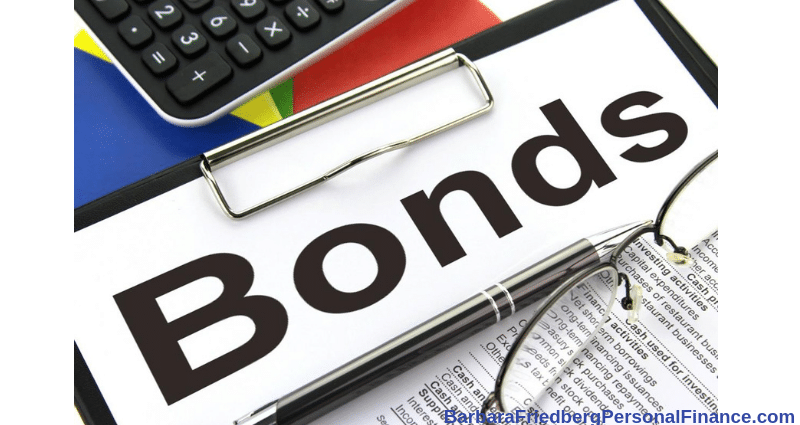
6. Short-term bonds or bond funds
These higher-yielding cash alternatives carry principal risk that is not present in certificates of deposit or money market mutual funds. Principal risk means the value of your initial investment may fluctuate.
If you have a larger portfolio, you can buy individual bonds maturing in the next 1-3 years. Check if your discount investment broker has questions available. If you wish, you can opt for short-term bond funds, which will slightly increase your investment returns. For example, the Vanguard Short-Term Index Bond Fund (VBISX) or the related ETF (BSV). These short-term bond index funds yield yields of 1.39% and 1.45%, respectively (returns will vary based on market forces). Also note that, unlike your bank savings account or certificate of deposit, the principal value may fluctuate.
When interest rates rise, the value of your bond funds and individual bonds will decrease. If you hold an individual bond until maturity, the change in the bond’s value doesn’t matter because you will receive the initial payment plus any coupon or interest along the way. Bond funds work differently. As a cash alternative, bond funds will offer higher yields, but if interest rates rise, these yields may be offset by falling prices. If you don’t sell the fund, you will receive larger distributions or interest payments as new bonds are added to the fund.
7. Certificate of Deposit (CD)
Certificates of deposit are sold through banks and financial brokerage firms such as Schwab and Fidelity. In exchange for investing the money for a specific period of time, the financial institution will pay a higher interest rate. CDs are sold with terms ranging from 3 months to 5 years. CDs with longer maturities generally offer higher returns. If you decide to sell, you may lose a small amount of interest.
To take advantage of the potential for future interest rate increases, you can buy certificates of deposit over time. This means putting some of your cash into each term, 1-year, 3-year, and 5-year CD. That way, when a CD matures, you can reinvest the proceeds and earn a higher future rate of return.
Cash Alternatives – Summary
With interest rates rising, make sure you know the best places to park your cash. For easy access to cash or liquidity, try a high-yield cash account from Wealthfront, Betterment, or M1 Finance. These cash accounts are fully liquid, and as interest rates rise, so do your returns. If you have an emergency fund, you can invest some of your cash in three- to six-month Treasury bills or certificates of deposit for a higher yield.
Get the best rates now, but don’t tie up your money for too long, as rates are expected to rise over the next year or so.
For more great articles from Barbara Friedberg, read these
- Do you think bonds are a good place to invest right now?
- The 10 Best Alternative Investments Right Now
- Why is asset allocation important?
- How much cash should I have on hand?
- Money-saving tips for renters
- Which investment carries the least risk?
Disclosure: Please note that this article may contain affiliate links, which means, at zero cost to me, I may earn a commission if you sign up or purchase through an affiliate link. That said, I never recommend anything that I personally don’t think has value.
**Betterment The annual interest rate (“APY”) on deposit balances in the Cash Reserve (“Cash Reserve”) represents the weighted average of the APY on deposit balances at banks participating in the Cash Reserve (“Program Banks”). This APY is variable and can change daily. Deposit balances are unevenly distributed among participating banks. The minimum deposit is $10, but there is no minimum balance required. If a customer designates one or more banks that are not eligible to receive deposits, the annual interest rate available to the customer may be lower. APY applies only to cash reserves and not to checking accounts held through Betterment Checking. Cash Reserve and Betterment Checking are separate products and are not linked accounts. For Cash Reserves (“CR”), Betterment LLC receives compensation only from our program bank. Betterment LLC and Betterment Securities do not charge fees on your CR balance.
*** M1 Plus costs $125 per year and comes with investment management, low margin rates, and a premium credit card.


