
Everyone, it’s finally time to buy a new car. Since I’ve purchased cars before, after buying eight cars in the first ten years after college, I now dread the idea. I just want to drive one car forever to save time, hassle and money.
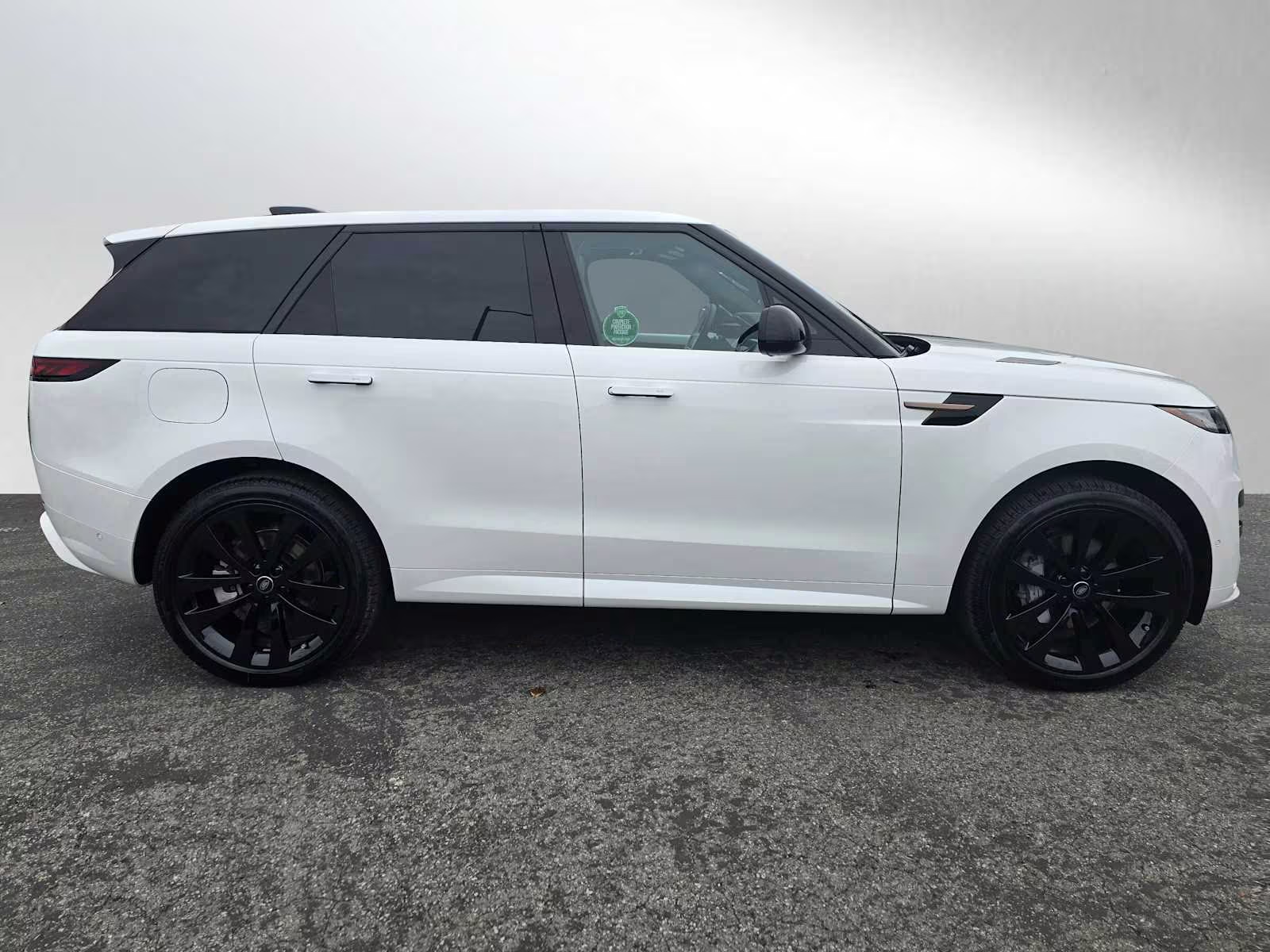
However, the 2015 Range Rover Sport I purchased in December 2016 started to have too many problems with only 10,600 miles on it. Yes, yes, I know. Land Rovers are notorious for maintenance issues. But at least I had a good nine years, right? I think so.
The average monthly cost of owning this car, including all maintenance, is about $555. It feels like it makes sense because of what it is and how much I enjoy driving it. I don’t regret buying this car nine years ago for $60,000 after tax. So part of me wants it to be another luxury car in the next 10 years.
Replacing a car every 10 years is my ideal ownership cycle. With security and technology continuing to advance, ten years feels like just about the right time.
Latest issues with my car
One day the check engine light came on again. I ended up replacing the oxygen sensor and oil gasket for $600. The oil dripping on my driveway is noticeable.
At the same time, I started getting “low battery” warnings every other day. ah? I just spent about $500 to replace the main battery in 2024 after eight years of use. It should easily last at least another five years.
So I drove around hoping to charge it. Then, one morning, just before driving my kids to Dad’s Day Camp to play tennis and swim, I received the most ominous news yet:
“Warning, the system will shut down in 1 minute.”
What are you doing?
Rather than pull out of the driveway and risk the road being closed, I just sat there idling for a few minutes. Nothing happened. But this warning makes me uneasy. I felt like I was on a rocket ship, ready to explode at any moment.
Total cost of restoration to date: $1,115
When I took the car back to my local mechanic they discovered that the smaller auxiliary battery was dead. This is the battery that controls the automatic start-stop function, door sensors, trunk and other electrical components.
What annoys me is that in 2024 I specifically told them that there two Replacement battery. They said they only found one. Ah, the drawbacks of saving money and not going to a Land Rover specialist. But boy, do dealers charge a premium. Plus, the store is not too far from home.
All in all, I spent $1,115 to replace the auxiliary battery and repair the oxygen sensor and oil gasket. If this is the only problem I’ve had in the past 1 year and 10 months since I last visited the ship, it’s totally manageable. Unfortunately, one potential problem remains: EVAP air leaks.
To fix or not to fix
The mechanics said they weren’t sure if replacing the oil gasket would completely fix the leak, as oil was visible on the top and bottom of the engine. They recommend driving it for a month and then coming back for a free inspection. If it’s still leaking I’d need an expert to remove the transmission or something like that. Labor only: Over $3,000.
If oil is still leaking by then, they recommend no More than $1,000 was spent to repair the EVAP leak. At that stage, I was probably paying $5,000 for a car that was 10 years old and worth less than $20,000.
I could easily continue to drive a car with a small oil leak and EVAP leak for a year, but that’s not ideal. Ultimately, I need to pass a smog check in two years and the car won’t pass if the EVAP leak isn’t fixed.
Not too concerned about luxury or looks in the car
Now as a father, my first priority is safety. Reliability is part of safety. I once owned a classic 1989 BMW 635 CSi, and when I drove into the Best Buy parking lot, it completely stalled. Brakes, electrical, engine – everything failed immediately. Never again.
Since my most important thing now is my time, I want a car that is as reliable as possible. My mechanic was nearby, so I dropped the kids off at school, returned the car, and walked home. But doing that year after year gets old. There have been problems to be solved for three consecutive years.
After reliability and security, Then I’ll look at performance and looks. I bought a Range Rover Sport in 2016 because it looked great and could be driven to Lake Tahoe in the winter without hanging on to a chain. But now it might be time to say goodbye.
While I think the new Range Rover Sport is beautiful and comes with a 4-year, 50,000-mile vehicle warranty, spending $110,000 on this model feels like a lot for two unemployed parents.
If one of us works at a large tech company with over $1 million in annual revenue, or at a hot AI startup like OpenAI, spending six figures on a car seems reasonable. But for us, we have to sell some Treasuries to be able to afford it. According to my 1/10 car buying rule, our cash flow does not allow for such a purchase, and I insist on adhering to my own financial independence rule.
Most reliable cars: Toyota, Honda and Tesla
Research shows that the most reliable brands are Toyota, Lexus, Honda, Acura and Tesla. European cars look great, but they eat your wallet alive.
Tesla has the best electric car technology and the least maintenance since there are fewer parts and no fluids required. Full self-driving is tempting, although if you don’t have a Model X, you’ll need to pay an additional $8,000. Still, a Tesla Model 3 or Model Y feels like a smart choice, and the price has come down.
The downside is that Tesla’s design is outdated and needs updating. Additionally, the $7,500 instant EV credit disappears at the end of October 2025. The good news is Tesla is offering incentives: $6,500 in lease credits and a free $2,000 upgrade.
What’s interesting? My house already has a Tesla fast charger built into it. Additionally, I have over 21 solar panels on my roof. Charging during the day is usually free.
Therefore, the most obvious alternative to my 2015 Range Rover Sport seems to be the Tesla Model Y, which sells for about $48,000. A three-year lease with zero money down is about $650 per month. What do you think? It feels great to be able to utilize more of the features of my house.

We also like Honda
Since I no longer care about European luxury cars, Toyota and Honda look attractive again. I owned a Honda Civic in 2002-2003 and loved it. But as a 25-year-old finance employee in San Francisco, I eventually wanted something better, so I upgraded to a BMW M3 and later a Land Rover Discovery II.
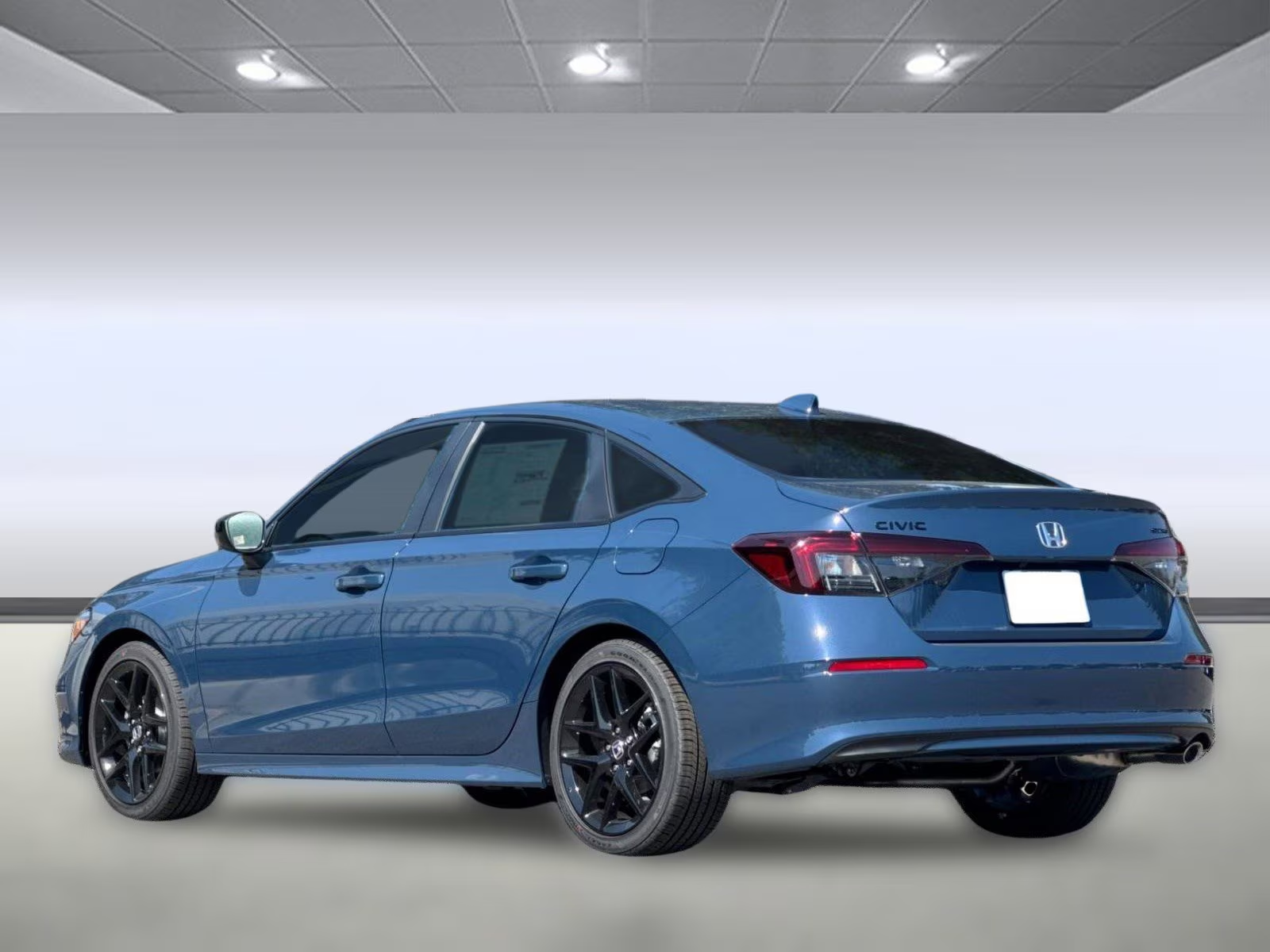
Wow, today’s Honda Civic looks great. The Civic Sport sells for about $28,000 before tax and about $31,000 ex-factory. It feels steep for a Civic, but these cars are very reliable. My only concern? Safety. Smaller cars may not hold up well in a crash.
That’s why I’m also eyeing the Honda CR-V Sport. Clean design, roomy interior, all-wheel drive for Lake Tahoe trips, about $38,000. Not bad, but the interior feels cheap compared to my Range Rover.
Toyota could be the winner
Then I looked at the Toyota Land Cruiser and the Lexus GX 550, which is basically a more luxurious Land Cruiser that costs a few thousand dollars more. The price before tax is $72,000 to $80,000, which feels high. Maybe the Toyota 4-Runner is the bigger car and costs about $51,000.
The Civic and CR-V Sport are economical, reliable, and unobtrusive. In my early days driving a Range Rover Sport, I occasionally felt a little embarrassed because it drew attention to itself. Now, ten years later, I don’t feel that way at all. In fact, it’s cheaper than many new Civics, Corollas, Camrys and Accords.

Lots of year-end discounts, but little desire to buy
Interestingly, I can easily negotiate a lower price with any dealer, especially at the end of the year. But I no longer get the excitement out of buying and selling cars that I did in my 20s.
Honestly, I just want to pay another $1,300 or so to fix the EVAP leak and keep the Range Rover running for another two years. The car has only 66,500 miles. My kids can kick the seats as much as they want. Door jingling? wonderful. Scratches? no problem.
Driving an older car gives you a sense of calm and you don’t have to worry about damage. But I don’t believe Range Rover’s problems will slow down. I have replaced the vacuum pump, water pump, PCV valve, battery, oil gasket, oxygen sensor, etc. But new problems still arise.
help me decide my next car
Pretend you’re me: a 48-year-old father of two young children living in San Francisco. Your primary concern is security and reliability. Annual mileage is approximately 6,500 miles. You lose your job and fly basic economy. But after 26 years of saving and investing, you have about $360,000 in passive income per year, which can cover almost all of your after-tax living expenses. Finally, you can purchase or lease through your small business.
Which car would you buy or lease?
- Sticking with an economy or midsize vehicle? Model Y, Toyota Camry, Honda Civic, Honda Accord, Toyota 4-Runner
- YOLO bought a luxury car again? Range Rover Sport, Toyota Land Cruiser, Lexus GX 550, Rivian RS1
- Or continue to fix up your 2015 Range Rover for $1,100-$3,000 a year, hope it doesn’t break down, and then drive it into the ground?
My original goal was to keep the car until 2031, when my son turns 15 and learns to drive. If he breaks it, no big deal. But I doubt the car would have lasted that long without expensive repairs. If we moved to Hawaii in 2029, I wouldn’t be willing to spend a lot of money on a car only to sell it quickly.
Please share the model you drive and your recommendations. What type of car do you drive, how much does it cost, and is it reliable? Thanks!
Subscribe to Financial Samurai
If you care about car safety, you should also care about protecting your family in the event of an accident. Consider purchasing affordable term life insurance through policy genius. During the pandemic, my wife and I obtained a 20-year term policy at a great rate to protect our two young children, and the peace of mind we felt was priceless.
To accelerate your journey to financial freedom, join over 60,000 others and subscribe Free Financial Samurai Newsletter. You can also have my posts sent to your email inbox as soon as they are published Register here. Everything is written based on first-hand experience and expertise.


