

Last updated: October 29, 2025 by Carlos P. Barry

The older we get, the more necessary it is to stay active. But sometimes traditional workouts are intimidating—or too difficult. That’s where Tai Chi for seniors comes in—a gentle, slow form of exercise that strengthens the body and relaxes the mind, helping seniors experience a more active, calmer life. In this ultimate guide, we’ll dive into what Tai Chi is, why it’s so beneficial for seniors, the benefits of the practice, how to get started, and specific tips for practicing safely.
What is Tai Chi?
Tai Chi is a traditional Chinese martial art form characterized by slow, fluid movements coupled with deep breathing and mindfulness. Tai Chi, or Tai Chi, was developed centuries ago and was originally used as a martial art and exercise, but has since become one of the most popular forms of health-promoting exercise.
Unlike high-intensity exercise, Tai Chi focuses on gentle, deliberate movements Improve flexibility, balance and coordination without putting stress on joints. It is sometimes called “movement meditation” because of its emphasis on mental focus, calmness, and body awareness.
There are many versions of Tai Chi, including Yang, Chen and Wu styles, but seniors benefit most from simple routines designed for beginners. They focus on safety, ease of learning, and health rather than martial arts applications.
Why Tai Chi is suitable for the elderly
Tai Chi achieves balance for physical, emotional and mental health. Here’s why seniors love it:
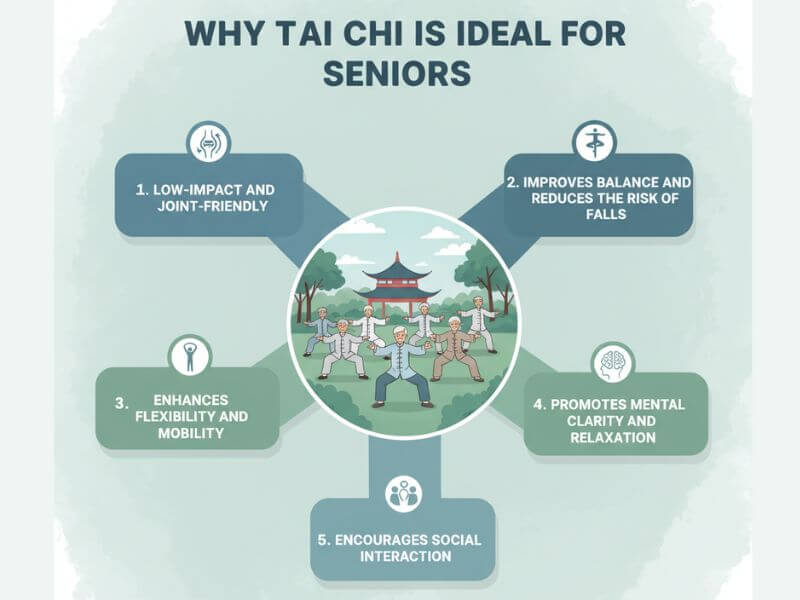
1. Low impact and coalition-friendly
Tai Chi is a safe form of exercise for older adults, including those with arthritis, joint pain, or limited physical function. The slow, controlled movements it requires minimize the risk of injury and help build strength and improve flexibility.
2. But it does improve balance and reduce the risk of falls
Among the elderly, one of the most important health problems is decline. Tai Chi is known to improve balance, posture, and coordination—functions that are important in reducing the risk of falls that can seriously affect independence.
3. Enhance flexibility and mobility
Tai Chi requires gradual stretching and opening of muscles and joints, which is essential to avoid back stiffness when walking, bending, or reaching.
4. Promotes mental clarity and relaxation
Tai Chi involves meditation and deep breathing and can be used to reduce stress, increase concentration and improve mood. This is a natural remedy for anxiety and mild depression. “
5. Encourage social interaction
Many older adults learn Tai Chi in community classes or online classes. This integration eliminates feelings of loneliness and motivates participants.
Health benefits of Tai Chi for the elderly
1. physical benefits
- Build muscle: Regular practice can strengthen your lower body and core muscles, and improving muscle tone can help you exercise better. Posture and balance.
- Enhance posture and alignment: The slow motion encourages you to move correctly, reducing discomfort and reducing fatigue.
- Support heart health: Although Tai Chi is gentle in nature, regular practice can help promote heart health and improve blood circulation.
2. Mental benefits
- Reduce stress and anxiety: By practicing conscious movement and controlled breathing, one can gain a Tranquility and peace.
- Sharpen the mind: Tai Chi improves concentration, memory and cognitive function.
- Improve mood: Older adults may feel more resilient and optimistic.
3. Social welfare
- Promote community: Group sessions bring you together with compassionate peers.
- Promotes regularity: The more people who connect with the way you feel pain or pleasure, the higher levels of consistency you can maintain.
How to Start Tai Chi for Seniors
Getting started with Tai Chi does not require any special abilities, nor does it require expensive equipment. Here’s how seniors can get started safely and successfully:
1. Choose the right class
- In your area: Many community centers, gyms, and senior centers across the country offer Tai Chi classes for beginners.
- Online courses: Online tutorials and Zoom classes are convenient for people who are unable to travel or have limited transportation.
2. Wear comfortable clothes
Choose comfortable, loose-fitting clothing and supportive shoes. This allows for better movement and stability. Avoid wearing heavy or tight clothing.
3. Safety first
- See your doctor before starting, especially if you are injured or have a long-term illness.
- Start slow. Don’t try to complete the entire movement pattern at once.
- If you have problems with balance, hold on to a chair or wall.
4. Warm-up exercises
Start by warming up for Tai Chi exercises by stretching, turning your shoulders, and rotating your ankles. This will help avoid stress and promote good flexibility.
Tai Chi for Seniors: Easy-to-Follow Basic Movements
Here are some gentle moves to start practicing Tai Chi:
1. Separate horse hair
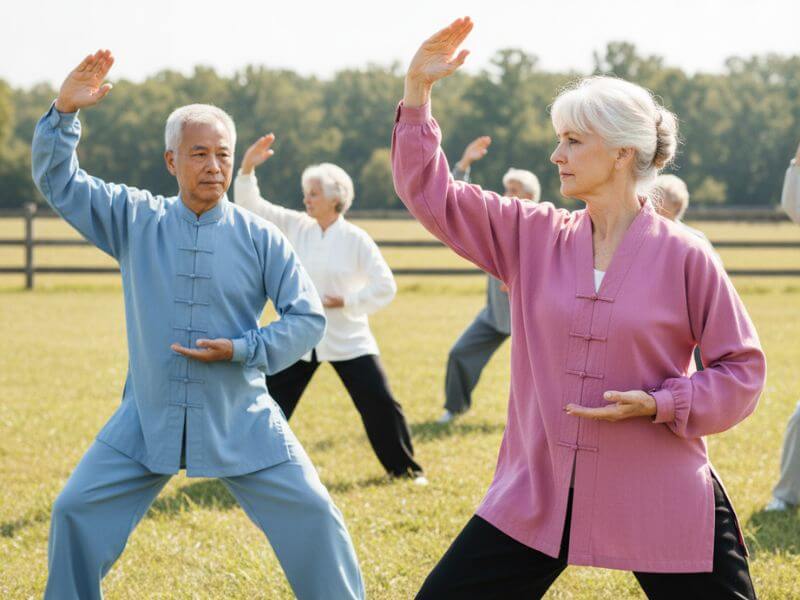
- Now, take a side step with one foot as you shift your weight.
- Separate your hands slowly, in gentle undulating motions, as if you are parting an invisible mane.
- Improve balance and coordination.
2. Wave your hands like clouds
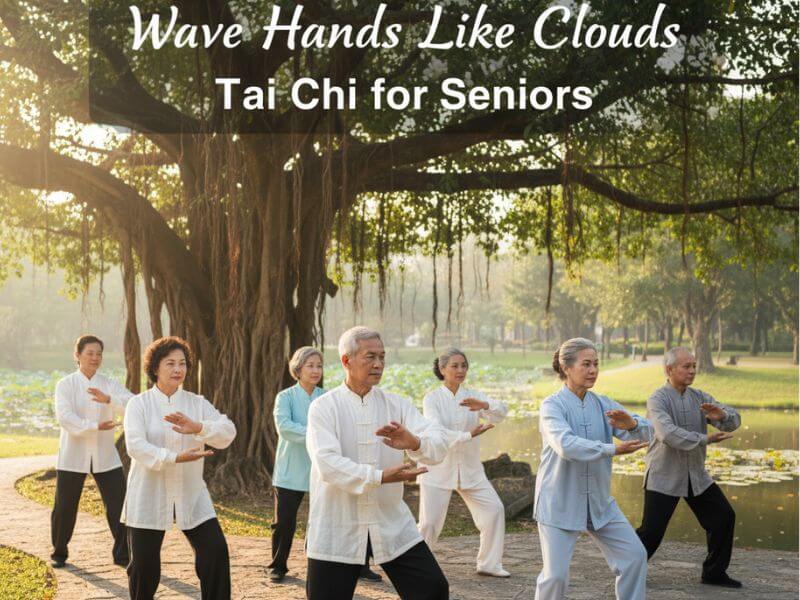
- Swing from side to side while swinging your arms in circles in the clouds.
- Improves fluid movement in the body and freedom and relaxation of the upper body.
3. Golden Rooster standing on one leg
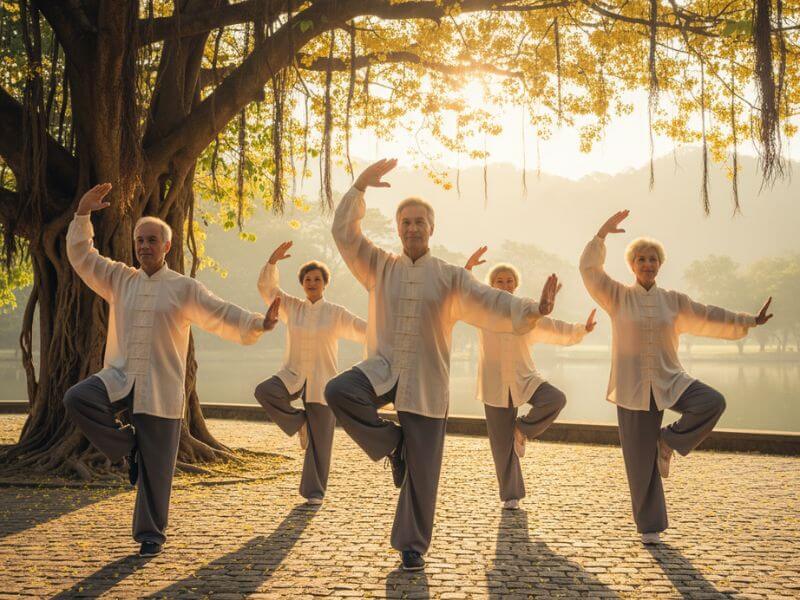
- Stand up straight and slowly lift one leg while maintaining balance.
- Helps strengthen legs and core while improving balance.
To be safe, seniors should start with a few repetitions and increase the amount of practice as strength and confidence build. The form can be improved by watching a video demonstration.
How often should older people practice Tai Chi?
Consistency is key. Expert advice:
- frequency: 3-5 times a week
- period: 20–30 minutes per class
- Key points: Movement Quality and Mechanics > Speed or Intensity
Even a 15-minute daily sprint can improve balance, flexibility, and mental clarity.
Tips for staying motivated
- Be realistic: Focus on small, achievable goals, such as improving your balance or practicing a new move.
- Community: Find accountability and motivation by taking a group class or joining an online forum.
- Track earnings: Use a journal or app to record your progress in strength, flexibility, or stress levels.
- celebrate achievements: Recognize your successes, even small ones, as they build motivation and confidence.
Precautions and safety tips
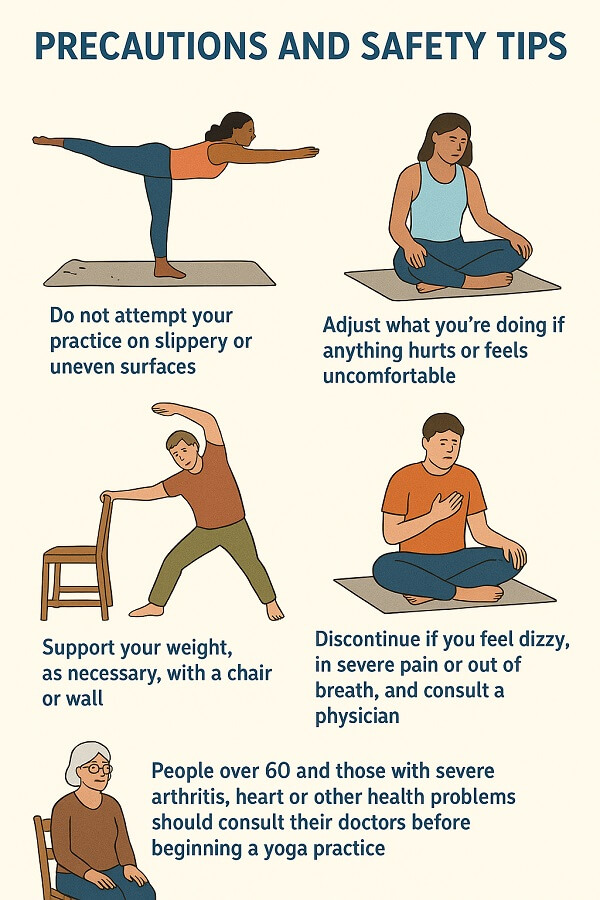
- Don’t try to practice on smooth or uneven surfaces.
- If there is any pain or discomfort, adjust what you are doing.
- Use a chair or wall to support your weight if necessary.
- If you experience dizziness, severe pain, or difficulty breathing, discontinue use and consult a physician.
- People over 60 and those with severe arthritis, heart disease, or other health problems should consult a doctor before starting a yoga practice
Frequently Asked Questions (FAQ)
Question one: Are elderly people with arthritis suitable for Tai Chi?
Yes! Tai Chi is low-impact and gentle on the joints. Exercise patterns can be modified without compromising health benefits and may help reduce stress.
Question 2: Can Tai Chi be an effective way to prevent falls?
Absolutely. Tai Chi improves balance, coordination, and lower body strength, all factors that can help reduce falls.
Q3: Does Tai Chi require any special equipment?
No special equipment is required. A comfortable set of clothes, some shoes to stand and lean on (or sit on), and a chair for support are all needed.
Q4: Can Tai Chi relieve stress and anxiety?
Yes. It combines slow movement, deep breathing and mindfulness and is designed to relax people while clearing their thoughts.
Q5: How long does it take to see the effects of practicing Tai Chi?
Millions of seniors have found balance, flexibility, and a better mindset through regular practice. Long-term effects last for several months.
For seniors, Tai Chi is not only an invigorating, low-intensity exercise; It is a holistic practice that strengthens the body, calms the mind, and nourishes the spirit. Whether you want to enhance your balance, increase flexibility, reduce stress, or make new friends, Tai Chi is a safe and enjoyable way to achieve your goals.
Getting started is easy, she says: Find a beginner-friendly class, practice regularly and pay attention to your body’s needs. If you do this every day, soon you’ll experience increased strength, mental clarity, and a heightened sense of well-being.
Start changing your life today with Tai Chi for Seniors. Your body and mind will thank you.
You may also like:
*Chair yoga for seniors: 7 gentle and safe yoga poses for seniors
*15 unique activities for seniors to keep them active and engaged
*11 Best Outdoor Games for Seniors: Engage Your Mind and Body

Source link


