

The first is a must-read for retirees and those approaching retirement: William Bengen’s A richer retirement lifethe long-awaited update of his classic work on the widely cited 4% rule: Protect client portfolios during retirement. First published in 2006, the book was initially aimed at financial advisors, but has become popular with the general investing public after receiving extensive media exposure over the years.
The 4% rule (actually closer to the 4.7% rule, depending on how you interpret it) refers to the “safe” percentage of an investment portfolio that a retiree can withdraw each year, after adjusting for inflation, without running out of money in 30 years. Bengen’s term for this is “SAFEMAX.”
The new book is said to be aimed at ordinary investors. Nonetheless, I found it to be very technical and full of charts and tables that may be more suited to its original audience of financial professionals. Including some useful appendices, the book is less than 250 pages.
After carefully looking at all of Bengen’s adjustments designed to minimize the effects of inflation, bear markets, and unexpected longevity, I’m left with the impression that the original 4% rule is still a pretty good first estimate for how much money retirees can safely withdraw in any given year.
Of course, technically 3.5% or 3% may be “safer,” especially if you expect to live long or want to leave a legacy for your heirs. I’ve even seen some people think that the 2% retirement rule might be suitable for extremely risk-averse retirees.
On the other hand, as long as the stock market and interest rates cooperate, withdrawing 6%, 7%, or more isn’t too risky. Regardless, that’s what many retirees do intuitively. They withdraw less in bear markets and splurge a little more in bull markets.
It’s also worth noting that whether you choose 3%, 5% or a larger percentage, the guideline really only applies to your investment portfolio, whether held in tax-deferred or tax-exempt accounts or taxable accounts. Most Canadian retirees can also rely on the Canada Pension Plan (CPP) and Old Age Security (OAS), not to mention employer pensions. Those who lack a large defined benefit pension but have substantial savings in RRSPs and TFSAs may choose to fund their pension or part of their pension by purchasing an annuity. (For timing, see this recent post on my blog.) For this concept, see Professor Moshe Milevsky’s excellent book, Provide retirement benefits to your nest egg.
Make money in any market
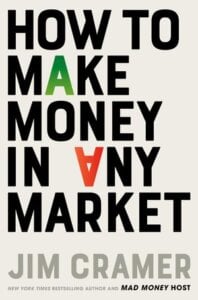
Even more controversial is Jim Cramer’s How to make money in any market. I know it’s fashionable among some mainstream financial journalists to disparage long-time hosts crazy money and in-house stock pickers quack in the street. I never watch him on TV (MSNBC) but often listen to his podcasts on walks or at the gym, usually at 1.5x, and skip interviews with CEOs of more speculative stocks that don’t interest me. Cramer’s critics tend to be die-hard indexers who swear it’s impossible to consistently pick stocks and “beat” the market over the long term. I tend to side with them, but more on that below.
The article continues as follows
X
Apparently Cramer begs to differ, often citing recommendations from Nvidia millionaires who bought shares of the amazing artificial intelligence (AI) chip around the time he named his dog (sadly now deceased). Kramer devotes an entire chapter to this call, which he brings up every chance he gets. I did buy that stock, even though I was too late and risk-averse to use it to change my life.
What his critics may not realize is that even Cramer believes in indexing at least 50% of a portfolio. In fact, he tells stock newbies that their first $10,000 should be invested in an S&P 500 index fund. It’s hard to argue with that.
Where I differ is that his book recommends holding only 5 stocks in 50% of an unindexed portfolio. That means each stock holds about 10% of the total portfolio, which is much more concentrated than most investors imagine. Most of the book discusses how to select his favorite long-term growth stocks with the help of modern artificial intelligence tools such as ChatGPT, Grok and others.
I used to wonder about a regular segment of his show “Am I Diverse?” where readers submit their five choices for Kramer’s consideration. I would be surprised if there were investors anywhere with such concentrated portfolios. Even Cramer’s high-profile charitable trust owns more than five stocks.
Best Canadian Dividend Stocks
how no invest
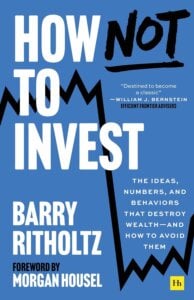
This brings me to the third book I ordered from Amazon, recently reviewed by Michael J. Wiener Michael James talks money Blog: Books by Barry Ritholtz How not to invest. Kramer cynics might quip that this would have been a better title How to make money in any market Hasn’t it been taken away by Ritholtz? After all, Cramer has inspired some ETF companies to offer “reverse Cramer” funds that short his leading long recommendations.
Ritholtz’s book is nearly 500 pages, but it’s very readable. It has attracted reviews from everyone from William Bernstein (“Destined to become a classic.”) to DFA’s David Booth, Shark TankMark Cuban and author Morgan Housel, known through The Motley Fool, wrote the foreword.
Ritholtz divides his book into four parts: Bad Ideas, Bad Numbers, Bad Actions, and Good Advice. While Cramer tempts us into personal stock picking, Ritholtz reminds us that few people do it well; most of us can’t successfully time the market either. He spends considerable space describing how poorly some expert predictions have turned out in the past. I have a newfound appreciation for the benefits of indexing, especially in the core if not all of a portfolio. As he puts it: “Indices (mostly). Have a series of low-cost stock indexes for the best long-term performance.” He lists five advantages of indexing: lower costs and taxes, you have all the winners, better long-term performance, simplicity and less bad behavior.
Fortunately, average investors have many advantages over professional investors, such as not having to benchmark against an index or worry about investors selling funds, being able to keep costs low, and theoretically having longer investment horizons. But the bottom line is that “indexing gives you a better chance of being ‘less stupid’.”


