

It’s been a few months since we returned from Hawaii and it’s surprising that my FOMO about AI Tech Boom has disappeared. Of course, as AI Capex soars higher, I still don’t have the job to pay me the money, but that’s OK. Instead, I allocated enough funds to invest in AI, and I no longer think I need to chase the industry from the inside.
You will find that my true fear hasn’t missed another AI unicorn. It is raising children in a cruel and more demanding world – in some way, because of their identity, they are rejected by every top 50 colleges they apply for. Then, when they graduated from So-So University, entry-level jobs have been automated by AI.
This is not some distant dystopia. The CEO of every major company is exploring or adopting AI. They are implementing a hiring freeze, cutting jobs, and reducing the number of thousands. Accenture cuts 11,000 jobs, and Lufthansa is the robbers because of AI rather than outliers. When my kids enter the workforce, anyone who can pay attention can infer that the terrible thing might be 15-18 years.
As an investor, this is the key to predicting the future. As a parent, this is the key to predicting the potential pain of a child. In both cases, if you predict half properly, you may end up becoming richer, calmer and ready.
Due to AI, work will definitely disappear
Compared to the total job openings in the white, the S&P 500 has seen the recent red performance. Note the inflection point: Investors are optimistic as AI promises to make profits due to increased productivity while job openings continue to spread.
As an investor, I hope the S&P 500 continues to climb – history shows that it will be long. As a parent, I’m worried that the total vacancies will continue to collapse to 2009 levels or worse. I clearly remember the 2008-2009 Global Financial Crisis-that was when I launched the Financial Samurai after the seventh round of Credit Suisse layoffs. At that time, fear was also my motivation.
At the pace we want, by 2032, we can easily see the S&P 500 in a record-breaking scenario, but the job openings match the lows of the last crisis.
However, after having private consultations with dozens of readers this year, I don’t think most Americans are aware of what’s going to happen. Of course, I may sound like a homestay, but most of my wealth comes from recognizing and investing in long-term trends. AI bulldozers are real.

Find your lowest AI investment comfort point
Just like there is a “minimum investment threshold” where work becomes optional and you can stop emphasizing office politics, there is a “minimum AI investment threshold” where you can stop worrying about AI destroying your career or your child’s livelihood.
This lowest AI investment threshold is conceptually similar to your coastal fire. But unlike the coastal fires that most people can’t rely on, the lowest threshold for AI investment is a positive hedge rather than a passive hope.
Here is how you calculate:
Insert the AI tool. Use a composite interest calculator or your favorite AI LLM to handle numbers for you.
Forecast timetable. Estimate when your job will be phased out due to AI, or your child will graduate from high school or college and enter the job market.
Estimate future living expenses. Take today’s basic living expenses and project them using a reasonable inflation rate (2%–4%).
Select your mat. Determine how many years of basic living expenses you want to keep in your AI investment, which is 1 to 10 years.
Discounted today’s dollars. Use a discount rate of 2%–8%, if conservatively, to calculate how much you need to invest now.
For example, use our 8-year-old son
Let’s take care of my 8-year-old son. In 2040, 15 years from now, he will be 23 years old and graduate from a regular university.
The revenue that can meet its basic needs is $40,000 today, equivalent to $62,319, with an annual inflation rate of 3% in 2040.
I estimate that it may take him 2-4 years to search for work to realize that his dream of clicking a button to optimize advertising for big tech companies is out of reach. At that time, he might have to work in trading to make a living. (Given that all data centers are under construction, electricians, plumbers and general contractors should meet the needs.)
So by 2040 I need to have about $125,000 to $250,000 (62,319 x 2 – 4 years) in order to give him that buffer.
This is how much I need to invest today To reach $125,000-$250,000 in 15 years, depending on the discount rate:
| discount rate | Requires $125,000 | Requires $250,000 |
|---|---|---|
| 2% | $92,877 | $185,754 |
| 3% | $80,233 | $160,465 |
| 4% | $69,408 | $138,816 |
| 5% | $60,127 | $120,254 |
| 6% | $52,158 | $104,316 |
| 7% | $45,306 | $90,612 |
| 8% | $39,405 | $78,810 |
Based on the worst-case scenario of reality, it will take 4 years to realize that his hopes and dreams are not going to come true – the 2% discount rate I invested today is about $185,754. That way, by the age of 23, I will have secretly Only $250,000 in AI investment was reserved to help him survive.
It is crucial that all parents can’t tell their children exactly how much they save and invest for them. You don’t want them to be gentle and develop a mindset of rights.
Artificial intelligence investment as a psychological hedge
Some of you may be scratching your head: If I only bear 2%-8% of annual returns, why invest in AI all the time? With such modest expectations, I could only invest in Treasury bills, generating 4%-5% of stocks.
I hear you. But it’s not just mathematics. This is psychology.
Will you work hard to invest in your child’s future, specifically for hedging AI? Maybe, maybe not. Furthermore, I’m trying to stay conservative on assumptions.
By investing specifically in companies that can make your life and your children more difficult, it becomes Easier Real savings and investing in the future. You have a clear one now Why Behind your delayed gratification. When you have a Whyalmost anything is possible.
When you start to see AI as an unstoppable beast that might bring you and your kids over, you’ll be more motivated to invest in AI companies.
Fear and responsibility drive me to invest
In 2025, I started a new mission due to fear of a terrible future and a strong sense of responsibility to protect my children. I decided to invest in the lowest AI investment threshold so that I could reduce my worries and even start cheering on technology that could hurt my kids.
The first step is to open it New fundraiser account It was dedicated to my kids in early August and it was $26,000. (There is a promotion where if you invest more than $25,000 you will get a free investment in a flagship real estate fund of $500.)
Then, as my treasury bill matured, I converged between $15,500-50,000 each time in a fundraiser to meet my minimum investment threshold. Every transfer I enter my account makes me feel better.

Confrontation everything happens
Only time will tell whether investing $190,000 in 2025 is based on names such as Openai, Artificial, Databricks, Anduril, Canva, Canva, Ramp and DBT Labs. If I do, I’d be excited – based on 2%-20% annual gains, this $190,000 growth could range from $256,000 to $2.87 million.
This means a child will cover all his or her expenses for four years of job search, or may last for life.
Plus, I could lose 80% of my money and ended up getting only $38,000 after 15 years, as AI proved to be an over-prone DUD. Maybe capital expenditure is too high for profit. Perhaps the world realizes that human supervision is more important than ever – Jevons’ paradox at work.
In this case, I will More excited If my kids all find livable wage jobs they like. Because as parents, we have a responsibility to raise our children to be self-sufficient adults. After 25 feelings of slowly leaving your value, rely on your parents.
Without protecting my kids from AI, I wouldn’t be able to invest $190,000 in risky assets in just two months. After I sold my old house in early 2025, most of the money came from risk-free Treasury bills. In the past, my dollar costs were slower on average, or invested in structured notes with downside protection when valuations were high.
But once I give my money from me to the kids, I extend my investment time range from “now” to the next 15 years. And, when you have such a long investment runway, it becomes easier to have stomach risk assets.
Asset allocation is also important
Finally, when determining the minimum AI investment threshold, compare that target number with your overall asset allocation. Comparisons can be compared to your total investable capital or total net assets.
Personally, my goal is to invest up to 20% of investable assets in alternative investments such as venture capital. I’m not only investing in open end venture funds for AI, but also investing in four other closed ventures, and I’m considering the other two.
Of course, Yale University and Harvard donate about 40% of the assets or private equity. But you don’t have the size, impact or edge of a billion-dollar donation. For the average DIY investor, allocating up to 20% of the alternatives is a lot.
The older you will get (hopefully richer), the more important the proper asset allocation is to eliminate volatility. View your goals, run new financial forecasts and maintain discipline. It’s easy to be hyped, especially in a bull market. But nothing lasts.
No more ai fomo
I’m no longer frustrated, I don’t work in a Hot AI startup every year. It feels like it was wasted without grinding when it was wasted in San Francisco AI Center. I’m also frustrated that AI steals my content on Financial Samurai and doesn’t provide the proper link.
However, since I have reached the minimum AI investment threshold for my two children, I am more peaceful.
It’s great to invest in the hungry founders and employees who work over 60 hours a week while I cook kimchi during the day and write to Financial Samurai. I’m so glad to invest in AI after the revolution begins. Our kids aren’t that lucky, which is why we invest in them.
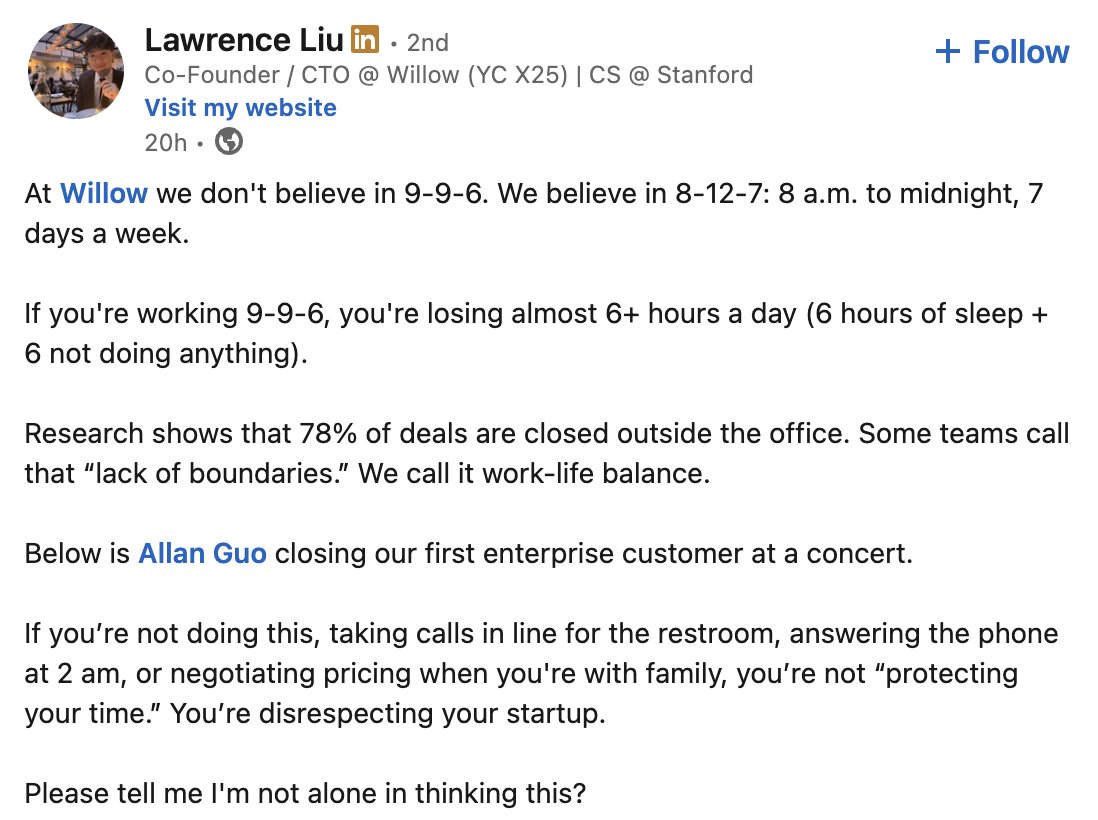
So, as far as all of your AI employees are concerned, keep grinding and enjoying the journey. You may bring great destiny over the next decade, and I would be grateful if you do. Now, return from 8 a.m. to midnight 7 days a week. Your wealth is waiting!
Readers, how to oppose AI destroying your child’s livelihood? Do you think most people know the risks AI brings to their job security? What other things are we doing to help our children thrive in the AI world?
Simple How to invest in AI
If you want to get in touch with a private AI company, please consider Fundraising Events. The platform owns stakes in names such as Openai, Anthropic, Anduril and Databricks. AI is ready to reshape the labor market, eliminate millions of jobs, and significantly increase productivity. Since private companies have longer private time than in the past, it makes sense to allocate some money to them if you want to capture potential upsides before it is made public. Fundraising is a long-term sponsor of Financial Samurai, and I personally am an investor in their funds.
For public exposure, you can also buy QQQ or Magnificent 7 shares – Apple, Microsoft, Google, Nvidia, Meta, Tesla -Plus OracleThis has become an invisible AI drama. The advantage of investing is that you don’t need to live in Silicon Valley to participate. Anywhere in the world, you can buy part of these companies to lead the AI revolution.
That is, don’t forget: There is no promises When investing in risky assets. Fast-growing companies can be very volatile during downturns. For example, before recovery, Meta lost more than half of its value in the 2022 bear market. Always stay diversified, keep an eye on your asset allocations, and make sure your portfolio matches your risk tolerance.


