

They also recognize that there are more fish in the sea than the stock and bond indexes represented in the core portfolio. They may seek to add returns or diversify further through high-yield bonds or crypto funds. There are no restrictions on applying add-ons to sofa combinations.
Second, some people strive to manage core portfolios, such as results, and can easily increase the complexity of their holdings after gaining investment knowledge and experience. Sofa potato investment provides a good entry level for more complex investments, by then, your nest eggs will likely grow and gain your own motivation.
While core risk continues to represent the majority of any long-term portfolio, the following are some asset types obtained through ETFs that are usually expressed in the core portfolio:
- Small stocks
- Emerging Market Stocks
- Foreign bonds
- High yield key
- Money Markets and High Interest Savings Accounts (HISA)
- Gold and other commodities
- Cryptocurrency
- Alternative strategies (utilization, inverse and hedge funds)
- Private assets
Investors may have been embedded in the investable universe in their portfolio, and investors may seek to increase their counterparts:
- Sector-specific stocks (e.g. REIT)
- Stocks in a specific country (such as India)
- Dividend stocks
- Corporate Bonds
- Short-term or long-term bonds
Compare the best TFSA rates in Canada
American investor Ray Dalio famously created an “all-weather portfolio” that he claims can stick to in almost any market environment. It breaks down like this: 30% of U.S. stocks, 40% of long-term Treasury bills, 15% of intermediate bonds, 7.5% of commodities and 7.5% of gold. If you choose, you can use ETFs to create reasonable faxes for your 24/7 portfolio.
Our Moneysense columnist also explains how to further diversify the core portfolio, thereby reducing the risk of loss.
This is such a strategy to enhance asset allocation funds with cash and/or gold bars, which will be well demonstrated in past market downturns. There is another buzzing 40/30/30 portfolio model that includes exposure to alternative assets as well as stocks and bonds.
If you think you might be ready to take the next step, rather than just investing in the major investment areas of Canadian bonds and stocks, consider one of the advanced portfolios listed below. These are just suggestions for allocations and we don’t think it will lead you astray. Feel free to adjust them to better adapt to your situation and build over time.
The article continues with the following advertisement
x
An important note: As your portfolio becomes more complex, it is difficult to populate each allocation with indexed mutual funds and asset allocation ETFs, which is why indexed ETFs are the preferred tool for building advanced portfolios. We have raised some funds, but there are about 1,500 ETFs in Canada, knowing there will be comparable competitive products there, which may have lower fees or other attractive attributes.
Consider our fund to choose only recommendations. For the latest ETF suggestions from experts, check out Moneysense’s guide to the best ETFs in Canada, which we update every May.
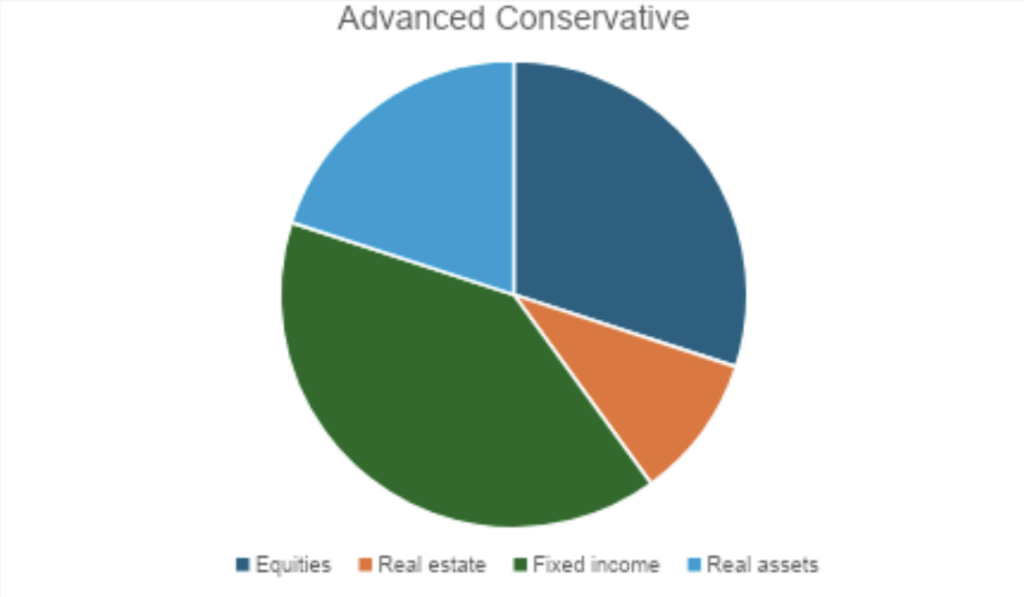
Advanced conservative portfolio
Stock: 30%
- Canada – Ishares Core S&P/TSX Upper Cap Composite Index ETF (XIC): 10%
- United States – iShares Core S&P 500 Index ETF (XUS): 10%
- Development International – Ishares Core MSCI EAFE IMI Index ETF (XEF): 5%
- Development International – Pioneer FTSE Emerging Markets All CAP Index ETF (VEE): 5%
Real Estate: 10%
- Ishares Global Real Estate Index ETF (CGR): 10%
Fixed income: 40%
- Canadian Long-term Bonds – BMO Long Federal Bond Index ETF (ZFL): 15%
- Canadian Short-term Bonds – iShares Core Canadian Short-term Bond Index ETF (XSB): 10%
- US Treasury Bonds – BMO Long-term US Treasury Bond Index ETF (ZTL): 15%
Actual assets: 20%
- Purpose diversified actual asset ETF (PRA): 20%
Advanced balanced portfolio
Stock: 50%
- Canada – Ishares Core S&P/TSX Upper Cap Composite Index ETF (XIC): 16.7%
- United States – Ishares Core S&P 500 INDEX ETF (XUS): 16.7%
- Development International – Ishares Core MSCI EAFE IMI Index ETF (XEF): 8.33%
- Development International – Pioneer FTSE Emerging Markets All CAP Index ETF (VEE): 8.33%
Real Estate: 10%


